
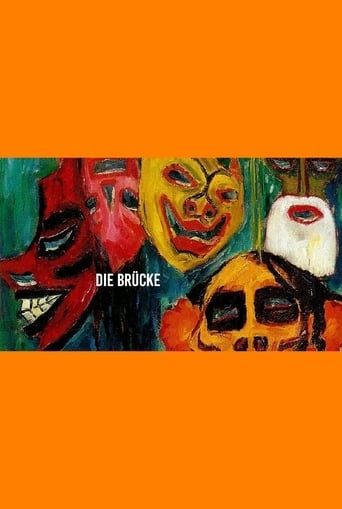
Die Brücke: The Birth of Modern Art in Germany
This movement marks the beginning of modern art in Germany. It is the German equivalent of French Fauvism, from which it draws its main inspiration, but it carries an Expressionist and social emphasis that is characteristic of Nordic 'angst.' The artists of Die Brucke were restless creatures, over-sensitive, haunted by religious, sexual, political or moral obsessions. Dramatic landscapes and nudes, mystical and visionary compositions, scenes of the countryside, the streets, the circus, the cafe-dansants and the demi-monde were their principal subjects. Their pure colours blaze in acid stridency, encompassed by rough, dry contours which show the influence of African art and primitive woodcuts. The work of the following is shown: Kirchner, Fritz Bleyl, Erich Heckel, Schmidt-Rottluff, Otto Muller, Emil Nolde and Max Pechstein.
Trailer
You may like
David Hockney: A Bigger Picture

Schama on Rembrandt: Masterpieces of the Late Years
Elliott Erwitt - Silence Sounds Good
The Genius of Leonardo Da Vinci
Tales of the American
The Art of Incarceration
Your War (I'm One of You): 20 Years of Joan of Arc
44 Pages
Raphael: The Lord of the Arts
National Gallery
The World of Lygia Clark
A Home with the Street Inside It
André Brasilier: Where dreams come from
Klimt & The Kiss

Ukiyo-e: Floating World Images

The Artist’s Garden: American Impressionism
Joseph Cornell: Worlds in a Box
Looking for Richard
Anselm
Making Waves: The Art of Cinematic Sound
Koyaanisqatsi
EPiC: Elvis Presley in Concert
Stop Making Sense
Iris